admin
For travelers searching for Cheap Hotels in Iowa, affordability is often a top priority. Guests want clean rooms, comfortable beds, convenient locations, and reliable service without exceeding their travel budgets. However, hotel security involves more than physical safety and room maintenance. Protecting guests’ personal information, payment details, and privacy is equally important.
The hospitality industry has embraced digital technology to make travel more convenient, from online reservations and contactless check-ins to digital room keys and electronic payments. These innovations help hotels serve guests efficiently, but they also create new security challenges. Cybercriminals increasingly target businesses that collect personal information, process payments, and depend on interconnected computer systems. Hotels of every size must therefore take cybersecurity seriously.
This is particularly relevant for travelers looking for Hotels near Orange City Iowa, whether they are visiting family, attending local events, traveling for business, or exploring northwest Iowa. Smaller hotels and independent accommodations can offer excellent value, but they must also manage digital risks associated with reservations, payment processing, guest Wi-Fi, and third-party booking platforms.
Cyberattacks can disrupt hotel operations, expose sensitive information, damage business reputations, and undermine guest confidence. Understanding these risks helps hotel owners strengthen their security practices while allowing travelers to make more informed accommodation decisions.
In this article, we explore five critical ways cyberattacks threaten hotel security, explain how these threats affect guests and hotel operators, and outline practical steps accommodations can take to protect their businesses.
Why Cybersecurity Matters for Hotels in Iowa
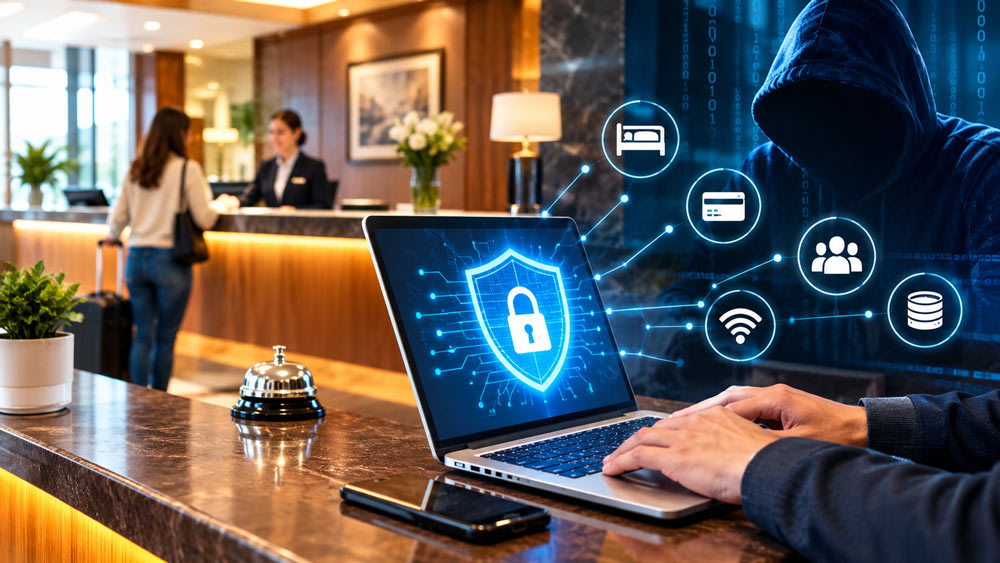
Hotels manage more sensitive information than many guests realize. A typical property may store guest names, telephone numbers, email addresses, reservation dates, payment records, identification details, and preferences. Its systems may also connect front-desk computers, booking software, electronic locks, accounting platforms, security cameras, and wireless networks.
Each connected system can introduce potential vulnerabilities if it is not properly configured, updated, and monitored.
Cybersecurity is not exclusively a concern for luxury resorts or large hotel chains. Independent motels, family-operated inns, budget accommodations, and properties offering Hotels Iowa may also rely on digital systems that criminals attempt to exploit.
A successful attack does not always require sophisticated technology. Weak passwords, fraudulent emails, outdated software, or improperly secured networks can provide an entry point.
For hotel owners, cybersecurity is an essential part of operational risk management. For guests, it is an important consideration when choosing where to stay.
1. Data Breaches Expose Guests’ Personal and Financial Information
One of the most serious cybersecurity threats facing hotels is the unauthorized access or theft of confidential guest information. Hotels collect personal details to manage reservations, verify bookings, process payments, and communicate with travelers. If criminals gain access to these records, the consequences can extend far beyond a single hotel stay.
How data breaches happen
Cybercriminals may exploit weak passwords, outdated booking software, compromised employee accounts, or vulnerabilities in third-party systems. Once inside a hotel network, attackers may attempt to extract guest databases, payment information, or reservation histories.
The hospitality sector has faced persistent risks involving booking platforms, front-desk systems, and payment technology. Data theft, phishing, and vulnerable connected systems are important concerns for hotel operators.
Information exposed in a hotel data breach may include:
- Guest names, email addresses, and telephone numbers.
- Reservation dates and accommodation details.
- Payment information, depending on how transactions are processed and stored.
- Account credentials or booking reference numbers.
- Other personal details collected during reservations or check-in.
Stolen information may be used for identity fraud, targeted scams, unauthorized transactions, or convincing messages that appear to come from a legitimate hotel.
Why this matters to budget-conscious travelers
People searching for Cheap Hotels in Iowa should not assume that a lower room rate automatically means weaker security. Equally, an expensive room does not guarantee that a property has excellent cybersecurity. Security depends on the hotel’s policies, technology, staff training, and management practices.
Travelers comparing Cheap Hotels in Iowa can take a few sensible precautions before booking:
- Use a reputable booking platform or the hotel’s verified website.
- Confirm that the booking page uses HTTPS and check the website address carefully.
- Avoid sending full payment card details through ordinary email or messaging apps.
- Use a credit card or another payment method with suitable fraud protections.
- Be cautious of unexpected messages requesting additional personal information.
How hotels can prevent data breaches
Hotel operators should limit the personal information they collect and retain only what is necessary for legitimate business purposes. Access to guest records should be restricted to authorized employees, and sensitive data should be encrypted both when stored and when transmitted.
Multifactor authentication, regular software updates, security monitoring, and periodic reviews of employee access can further reduce risk.
Protecting guest information is not simply a technical responsibility. It is a fundamental part of maintaining customer confidence and delivering a dependable hospitality experience.
2. Ransomware Can Shut Down Hotel Operations
Imagine arriving at your hotel after a long drive across Iowa, only to discover that the reception team cannot access the reservation system. Staff members cannot verify bookings, room assignments are unavailable, and payment processing has stopped working.
This type of disruption can occur when a hotel experiences a ransomware attack.
Ransomware is malicious software that can encrypt files, disable systems, or prevent an organization from accessing its own information. Criminals may demand payment in exchange for a decryption key and may also threaten to publish stolen data.
How ransomware affects hotel security
Modern hotels depend on interconnected digital tools to keep daily operations running. These may include property management systems, reservation databases, accounting software, payment terminals, and staff communication platforms.
A successful ransomware attack can disrupt several functions simultaneously.
Reservation management: Staff may lose access to guest bookings, room availability, and check-in records.
Payment processing: Electronic transactions may become unavailable, delaying check-in and check-out.
Room access: Properties using connected electronic locks may face additional challenges if the systems controlling them are compromised or unavailable. The actual impact depends on the lock design and backup procedures.
Business continuity: Managers may struggle to coordinate housekeeping, assign rooms, communicate with guests, or access essential records.
The financial consequences for affordable hotels
Cybersecurity incidents can be particularly difficult for smaller accommodation providers because they may have fewer financial resources and limited in-house technical support.
Recovery expenses can include specialist IT assistance, system restoration, emergency hardware replacement, legal advice, customer notifications, and lost bookings. Even after systems are restored, negative reviews and reduced customer confidence can affect future revenue.
For travelers searching for Cheap Hotel Suites Orange City Iowa, an operational disruption could mean longer check-in times, reservation complications, or unexpected changes to their stay.
However, a cyberattack does not automatically mean that guests will lose their reservations or that a hotel is unsafe. The outcome depends on the systems affected and the property’s recovery arrangements.
How hotels can reduce ransomware risks
Hotel managers should maintain secure backups of essential systems and test whether those backups can actually be restored. At least some backups should be isolated from the main network so that attackers cannot easily encrypt or delete them during an incident.
Additional safeguards include:
- Installing security updates promptly.
- Using reputable endpoint protection and monitoring tools.
- Restricting administrative privileges.
- Training employees to recognize suspicious attachments and links.
- Developing a written incident-response and recovery plan.
- Maintaining manual procedures for essential guest services.
Preparedness allows hotel staff to focus on guests and restore essential services more efficiently when digital systems fail.
3. Phishing Attacks Trick Hotel Employees and Guests
Not every cyberattack begins with a complicated technical exploit. Some begin with an ordinary-looking email, text message, or phone call.
Phishing is a form of social engineering in which criminals impersonate trusted people or organizations to persuade someone to reveal sensitive information, click a malicious link, download an infected file, or authorize a fraudulent payment.
Hotels are attractive targets because their employees regularly communicate with guests, travel agencies, booking services, suppliers, and managers. That constant flow of messages creates opportunities for criminals to impersonate legitimate contacts.
Common phishing scenarios in the hotel industry
Fake reservation requests: A message appears to come from a prospective guest and contains a link to a supposedly necessary booking document. Opening it may expose a staff computer to malware or direct the employee to a fraudulent login page.
Fraudulent supplier invoices: Criminals impersonate a cleaning company, maintenance contractor, or other vendor and request payment to a different bank account.
Fake management instructions: An attacker claims to be a manager and urgently requests guest records, account credentials, or a change to payment details.
Guest payment scams: Travelers receive messages claiming that their reservation requires immediate verification or an additional payment. The link directs them to a fraudulent website designed to steal payment information.
Account takeover attempts: Criminals obtain or guess login credentials and use them to access hotel email accounts or reservation platforms.
How phishing affects Cheap Hotels in Iowa
A small hotel may have employees who perform several jobs, including reception, reservations, customer service, and basic administration. During busy periods, workers may have little time to scrutinize every message.
One mistaken click can potentially expose an account or give attackers a foothold in the business network. A compromised email account may then be used to target additional employees or send fraudulent messages to guests.
Travelers should also remain alert. If a message about a stay at a Cheap Hotels in Iowa property requests unexpected payment, asks for a password, or creates pressure to act immediately, verify the request independently before responding.
Practical ways to prevent phishing
Hotel owners should train staff to recognize suspicious links, unexpected attachments, unusual sender addresses, and urgent requests involving money or confidential information.
Employees should verify changes to supplier bank details using a previously established telephone number rather than the contact information included in a suspicious email. Multifactor authentication should be enabled on email, reservation systems, and other important accounts.
Hotels can also establish a clear reporting procedure so staff members can quickly flag suspicious messages without fear of embarrassment.
Guests can help protect themselves by visiting the hotel’s website directly rather than clicking unfamiliar links in unexpected messages. If a payment request seems unusual, contacting the property using a verified phone number is safer than responding to the message.
A culture of verification helps prevent small mistakes from becoming expensive security incidents.
4. Insecure Guest Wi-Fi Can Put Privacy at Risk
Free Wi-Fi is one of the most appreciated amenities in budget accommodation. Travelers use hotel internet connections to check emails, attend online meetings, access banking services, make reservations, and stay in touch with family.
However, an inadequately secured wireless network can introduce cybersecurity risks for both hotel guests and the business itself.
The problem is not that all hotel Wi-Fi is unsafe. Rather, risks increase when networks are poorly configured, outdated, or insufficiently separated from systems used by hotel employees.
How cybercriminals exploit weak Wi-Fi security
Several types of attacks can target poorly protected wireless networks.
Fake Wi-Fi hotspots: Someone creates a wireless network with a name similar to the hotel’s official network. Unsuspecting guests connect to it and may expose information through fraudulent login pages or other deceptive techniques.
Poor network separation: If guest Wi-Fi is not properly isolated from internal business systems, an attacker who gains access to the guest network may have an opportunity to probe other connected devices.
Outdated network equipment: Routers and access points running obsolete firmware may contain vulnerabilities that attackers can exploit.
Weak passwords and configurations: Default administrator credentials, insecure settings, or poorly managed shared passwords can increase the likelihood of unauthorized access.
Unprotected online activity: Guests who connect to untrusted networks and ignore browser warnings may expose themselves to fraudulent websites, credential theft, or other online threats.
Why Wi-Fi security matters to budget travelers
People looking for Cheap Hotels in Iowa may prioritize free internet access when comparing accommodation options. That is reasonable, particularly for families, remote workers, and visitors staying several nights.
However, a complimentary connection should be supported by responsible security practices.
When evaluating Cheap Hotels in Iowa, guests can ask whether the property offers a dedicated guest network and whether it is separated from the systems used for hotel administration.
Travelers should also follow basic precautions:
- Confirm the official Wi-Fi network name with reception.
- Avoid entering banking credentials on unfamiliar or suspicious websites.
- Keep device operating systems and security software updated.
- Use a trusted VPN when appropriate, especially when handling sensitive information on untrusted networks.
- Disable automatic connections to unfamiliar wireless networks.
- Avoid ignoring certificate warnings or entering passwords into unexpected login pages.
A VPN can help protect traffic from some local network threats, but it does not make fraudulent websites safe or eliminate every cybersecurity risk.
How hotels can improve wireless security
Hotel operators should separate guest networks from administrative, payment, and other sensitive business networks using appropriate network controls. They should change default equipment passwords, install firmware updates, use modern encryption, and monitor for suspicious activity.
Access points should be configured securely, and network equipment should be replaced when it no longer receives necessary security updates.
For smaller properties, professional network configuration can be a worthwhile investment. A well-managed network helps protect guest privacy while allowing visitors to enjoy convenient internet access.
5. Third-Party Software and Connected Devices Can Create Hidden Vulnerabilities
Hotels rarely operate using a single software platform. Most rely on a combination of reservation services, payment processors, property management software, accounting tools, online travel agencies, and other technology providers.
Some properties also use smart televisions, electronic door locks, connected thermostats, surveillance cameras, and building management systems.
These technologies can improve convenience and operational efficiency. However, each connection may introduce another security dependency.
How third-party systems increase cyber risk
A hotel may invest in strong internal security and still face risks through an external service provider.
For example, a reservation platform might have access to booking information, while a payment provider processes financial transactions. A maintenance contractor may have remote access to particular systems. If one provider’s account or infrastructure is compromised, attackers may attempt to use that access to reach hotel information.
Several common risks deserve attention.
Compromised booking platforms: Attackers who gain access to reservation accounts may view booking details, alter information, or send fraudulent communications.
Insecure smart devices: Connected room equipment may run outdated software or retain default passwords, creating possible entry points into a network.
Excessive vendor permissions: A service provider may have more access to hotel systems than it needs to perform its work.
Unpatched software: Outdated applications can contain known security flaws that criminals actively seek to exploit.
Supply-chain attacks: A compromise affecting a trusted technology provider can potentially impact multiple businesses that depend on its services.
What this means for Cheap Hotels in Iowa
Travelers booking an affordable suite may interact with several systems before even arriving at the property. They may reserve through an online travel agency, receive confirmation by email, pay a deposit, and use an electronic key after check-in.
These steps are convenient, but the hotel must ensure that its technology partners follow appropriate security practices.
A property’s room price does not reveal how securely its vendors manage information. Likewise, the use of modern technology does not automatically mean a hotel is more or less secure.
Hotel managers should evaluate their suppliers before granting access to sensitive systems. Contracts should clearly define security responsibilities, incident reporting, data handling, and access restrictions.
Steps hotels can take to control third-party risks
Hotel operators can reduce exposure through several practical measures:
- Review vendors regularly. Understand what information each provider collects, stores, and accesses.
- Limit access privileges. Give suppliers only the permissions necessary to perform their assigned tasks.
- Use multifactor authentication. Require additional verification for vendor accounts and remote access wherever supported.
- Update connected devices. Maintain current firmware and replace unsupported equipment.
- Separate critical systems. Keep guest Wi-Fi, administrative systems, payment systems, and smart devices appropriately segmented.
- Prepare for vendor outages. Establish backup procedures for reservations, payments, and essential guest services.
Hotels should also maintain an inventory of connected devices and software so that managers know which systems need updates, monitoring, and eventual replacement.
These measures help properties improve resilience without abandoning the technology that makes modern accommodation convenient.
How Can Travelers Choose a Secure and Affordable Cheap Hotels in Iowa?
Understanding cybersecurity threats does not mean travelers should avoid budget accommodation. Instead, it highlights the value of looking beyond room prices when comparing available options.
Whether you need a short overnight stay or a spacious suite for a family visit, a few simple checks can help you make a more informed decision.
1. Book Through Trusted Channels
Use a hotel’s verified website or a reputable booking service. Check the domain carefully and be cautious of deals that seem unusually cheap or require immediate payment through unfamiliar channels.
2. Read Recent Guest Reviews
Look for consistent feedback about customer service, reservation accuracy, cleanliness, and the handling of guest concerns. Reviews cannot prove that a hotel’s systems are secure, but they can provide useful information about the overall experience.
3. Ask Questions When Something Seems Unusual
If a payment request, booking confirmation, or check-in instruction appears suspicious, contact the property directly using verified contact details.
4. Protect Your Own Accounts
Use unique passwords, enable multifactor authentication where available, keep devices updated, and monitor payment accounts for suspicious transactions.
5. Compare Overall Value, Not Just the Nightly Rate
Consider room size, location, parking, breakfast, Wi-Fi, cancellation policies, and customer service. A well-managed property that meets your needs may offer better overall value than the lowest-priced option.
What Should Hotel Owners Do After a Cyberattack?
Prevention is essential, but no security system can guarantee that every attack will be stopped. Hotel operators should also be prepared to respond quickly and responsibly.
If a property suspects a cyberattack, its immediate priorities should include containing the incident, protecting guest safety, preserving relevant evidence, and restoring essential operations.
A practical response plan should include the following steps:
- Contain the threat: Engage qualified IT or cybersecurity professionals to isolate affected devices and prevent further unauthorized access.
- Protect essential services: Activate backup procedures for reservations, check-in, and other critical operations.
- Investigate the incident: Determine which systems and information may have been affected.
- Secure compromised accounts: Reset credentials, revoke unauthorized sessions, and review access permissions.
- Notify appropriate parties: Follow applicable legal requirements and inform affected guests when necessary.
- Restore systems safely: Recover from verified backups after addressing the underlying vulnerability.
- Review what went wrong: Improve staff training, system configurations, vendor controls, and response procedures.
Hotel managers should avoid deleting potentially useful evidence or immediately reconnecting compromised devices without appropriate guidance. A coordinated response can help limit damage and support a more reliable recovery.
The Future of Hotel Security: Balancing Affordability and Digital Protection
Technology will continue to influence the hospitality industry. Online booking systems, digital room keys, automated customer service, and connected devices can make accommodation more convenient for travelers and easier to manage for hotel operators.
However, every new system must be introduced with appropriate safeguards.
For smaller accommodation providers, cybersecurity does not necessarily require a large in-house IT department or an expensive collection of security products. A sensible starting point is to maintain updated software, use strong authentication, train employees, secure guest networks, restrict access to sensitive information, and back up important data.
As a property grows, professional security assessments and managed cybersecurity services may help address more complex risks.
For guests, the objective is equally straightforward: enjoy the convenience and affordability of modern accommodation while taking reasonable steps to protect personal information.
Conclusion
Cyberattacks pose real challenges for hotels, regardless of their size, location, or nightly room rates. Data breaches can expose personal information, ransomware can disrupt reservations, phishing can compromise employee accounts, insecure Wi-Fi can create privacy risks, and third-party vulnerabilities can affect interconnected hotel systems.
These five threats demonstrate why cybersecurity should be treated as an essential part of hotel management rather than an optional technical expense.
Travelers researching Cheap Hotels in Iowa, Hotels near Orange City Iowa, or Cheap Hotel Suites Orange City Iowa should consider overall service quality, booking reliability, privacy practices, and guest feedback alongside affordability.
At the same time, hotel owners can strengthen customer confidence by investing in practical security measures, training their teams, monitoring their systems, and preparing for incidents before they occur.
Ultimately, a successful hotel stay involves more than a comfortable room at a reasonable price. Guests also deserve confidence that their personal information is handled responsibly and that the property is prepared to protect both its digital systems and its everyday operations.